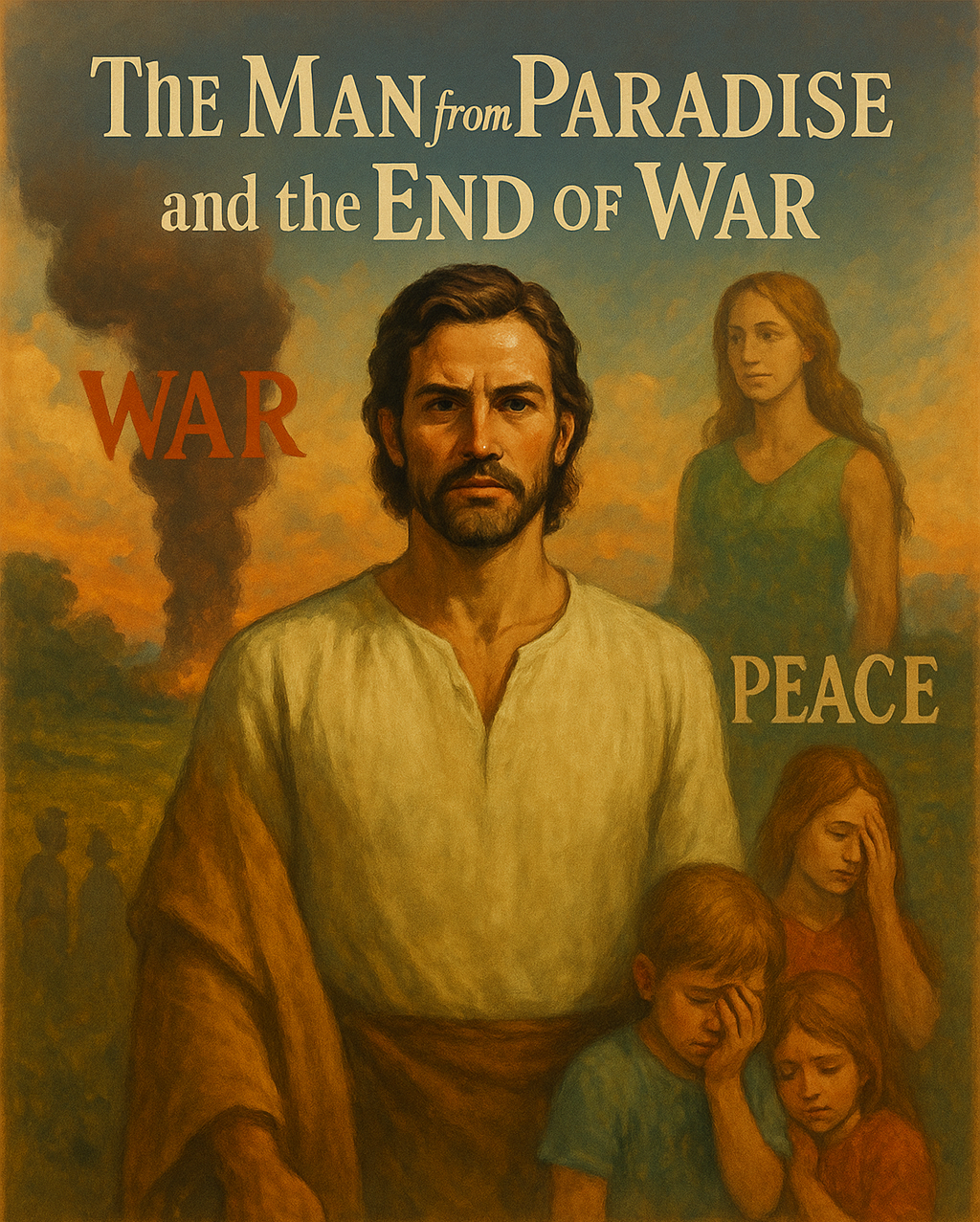
About 20 years ago, when I had only been facilitating Family Constellations for two years, we did a constellation with representatives for «nature»,»man», «woman», «work», «love», «children», «peace»… and «war».
And «war» became the center of the entire drama.
The Constellation lasted about 40 minutes, and war did not appear as an external enemy, but as a force that belonged to the system and fulfilled a function within it..
At the beginning, all the fundamental elements of life were present: nature, man, woman, work, love, children, peace… Yet war occupied the center, as if everything else were organized around it. Children and peace were not fighting; they were withdrawn, overwhelmed, crying in a corner. This already says something essential: when war dominates a system, the most vulnerable (children) and the highest value (peace) cannot act. They suffer, but they have no power to change the situation.
The turning point came when a deeper movement appeared and two new figures were introduced: the Man from Paradise and the Woman from Paradise — not the historical man and woman shaped by trauma, guilt, or survival, but a new masculine and feminine, closer to origin, innocence, and responsibility.
Then war spoke. And this is crucial. War said, in essence:
“I do not dissolve in struggle. I withdraw only when what is essential awakens and assumes responsibility”
War clearly stated that only two forces could expel it:
-
either children and peace,
-
or the Man from Paradise.
But children should never have to take responsibility for ending war. When they try, they are destroyed or silenced. The responsibility cannot fall on innocence or ideals.
So I invited the Man from Paradise to ask the representative of War to leave.
What struck me most about that constellation was that the woman from paradise felt her strength and her power—and embodied vital force, presence, and clarity. But she was not the one who was meant to expel war. Why?
Because in this constellation, the movement pointed to something very precise:
the masculine principle had to assume conscious responsibility.
Not the masculine as domination or violence — but as direction, decision, and boundary.
War did not need to be attacked. It needed to be faced and dismissed by a man who was no longer driven by fear, compensation, or unresolved trauma.
The deeper meaning is this:
-
War persists when men remain unconsciously loyal to violence, guilt, power struggles, or unintegrated pain.
-
Peace does not come from opposing war emotionally, nor from asking children or ideals to fix what adults created.
-
Peace emerges when a mature masculine consciousness says: “This ends with me.”
So when it is said that “the movement of change begins with man”, it is not a moral judgment and not a political statement. It is a systemic observation:
When the masculine takes responsibility for life instead of domination,
war loses its place in the system.
Only then can children relax.
Only then can peace step out of the corner and return to the center — not as a hope, but as a lived reality.
@AngelPrimal